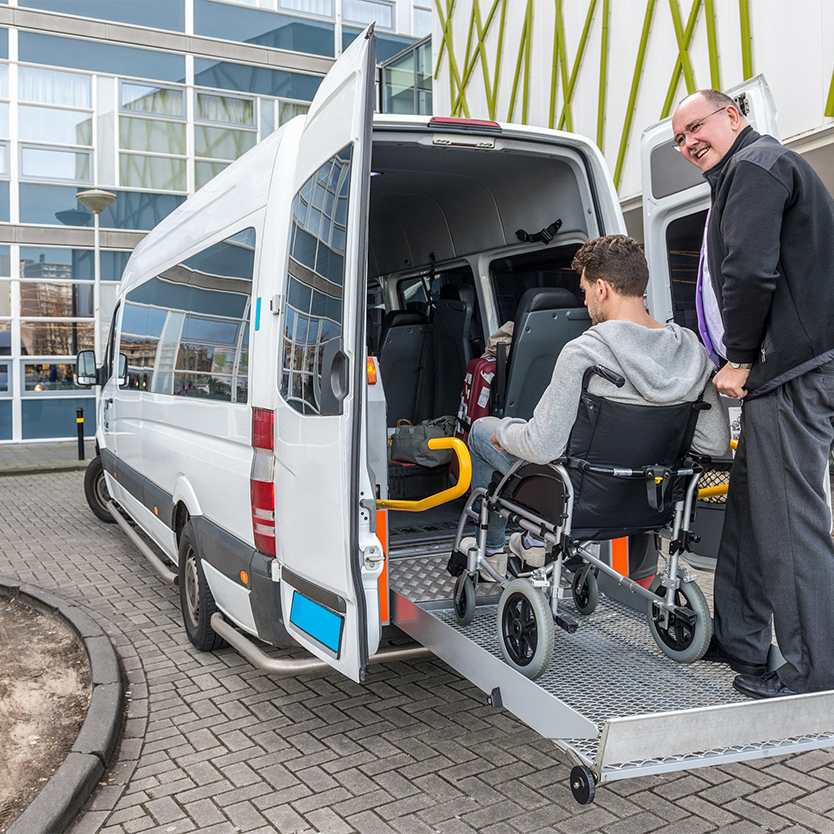
Wheelchair tiedown and occupant restraint training keeps every passenger safe during transit. Furthermore, it protects the staff responsible for their care. At Accessible Ltd, we deliver this training on-site, alongside best practice passenger lift operation.
Every passenger has the right to safe and secure transit. Therefore, staff who transport wheelchair users must receive proper training and certification. This covers the correct use of wheelchair anchor points, tiedown systems, and occupant restraint systems. These are known as WTORS — Wheelchair Tiedown and Occupant Restraint Systems.
In addition, staff must be trained in the safe operation of passenger lifts. All training aligns with PSVAR DDA Regulations. Consequently, your organisation meets its legal obligations and protects every passenger in its care.
Under Section 2 of the Health and Safety at Work Act 1974, employers must provide correct information, instruction, and training to all employees. This is a legal requirement, not a choice. As a result, staff must be able to carry out their duties safely and competently.
Failing to provide this training puts passengers at risk. Moreover, it exposes your organisation to serious legal liability. Therefore, investing in proper training is both a legal duty and a moral one.
Why choose Accessible Ltd?
Accessible Ltd is the only truly independent training company in the UK that covers all wheelchair equipment manufacturers. Furthermore, we train staff on all makes and models of equipment. Consequently, your team learns to use whatever system your vehicles are fitted with.
We hold manufacturer approvals from BraunAbility, Koller Engineering, NMI Safety Systems, Qstraint, AMF Bruns, PLS Passenger Lift Services, and Ratcliff Palfinger. As a result, you can be confident that our training meets the highest industry standards.
Keeping your equipment legally compliant is essential. Two key pieces of legislation apply directly to wheelchair and lift equipment.
First, LOLER regulations require that lifting equipment used to lift people undergoes a thorough examination every six months. This applies whether the equipment is designed to lift people or not. Therefore, regular inspections are a legal requirement for all passenger-carrying lift systems.
Second, Regulation 5 of PUWER requires you to maintain all work equipment efficiently and in good repair. In addition, Regulation 6 of PUWER requires inspections at suitable intervals to maintain health and safety standards. Together, these regulations ensure your equipment remains safe and fit for purpose.
When work equipment deteriorates, it can fail without warning. As a result, passengers and staff face serious risk of injury. Therefore, regular checks on your wheelchair tiedown and anchor equipment are essential.
Ask yourself when your equipment was last inspected. If you are unsure, now is the time to act. Contact Accessible Ltd today and we will help you stay safe, compliant, and fully trained.
Many organisations do not realise that LOLER applies to their passenger lift and wheelchair equipment. Consequently, they may be operating outside the law without knowing it. Furthermore, non-compliance can result in serious fines and legal action.
We can help you understand your obligations under LOLER. In addition, we offer on-site training that covers both equipment use and compliance requirements. Therefore, you get everything you need in a single visit from our expert team.
Who needs wheelchair tiedown training?
Any driver or operator transporting wheelchair users on buses, coaches or minibuses is legally required to complete wheelchair tiedown and occupant restraint training under PSVAR legislation.
Do you deliver wheelchair tiedown training across the UK?
Yes — Accessible Ltd travels to your site anywhere in the UK. We come to you, saving your team time and travel costs.
How long does wheelchair tiedown training take?
Training is typically delivered in a half or full day session depending on group size and requirements.
Is your wheelchair tiedown training accredited?
Yes — all our training is fully accredited and delegates receive certification upon completion.
What is PSVAR training?
PSVAR stands for Public Service Vehicles Accessibility Regulations. It sets out legal requirements for operators of buses and coaches regarding accessibility for disabled passengers including wheelchair users.
Different manufacturers do things differently, and the detail matters when a passenger is relying on it. We have dedicated pages covering the systems we are most often asked about:
If your fleet runs a mixture, one course can cover all of it.
Call us now to book


